

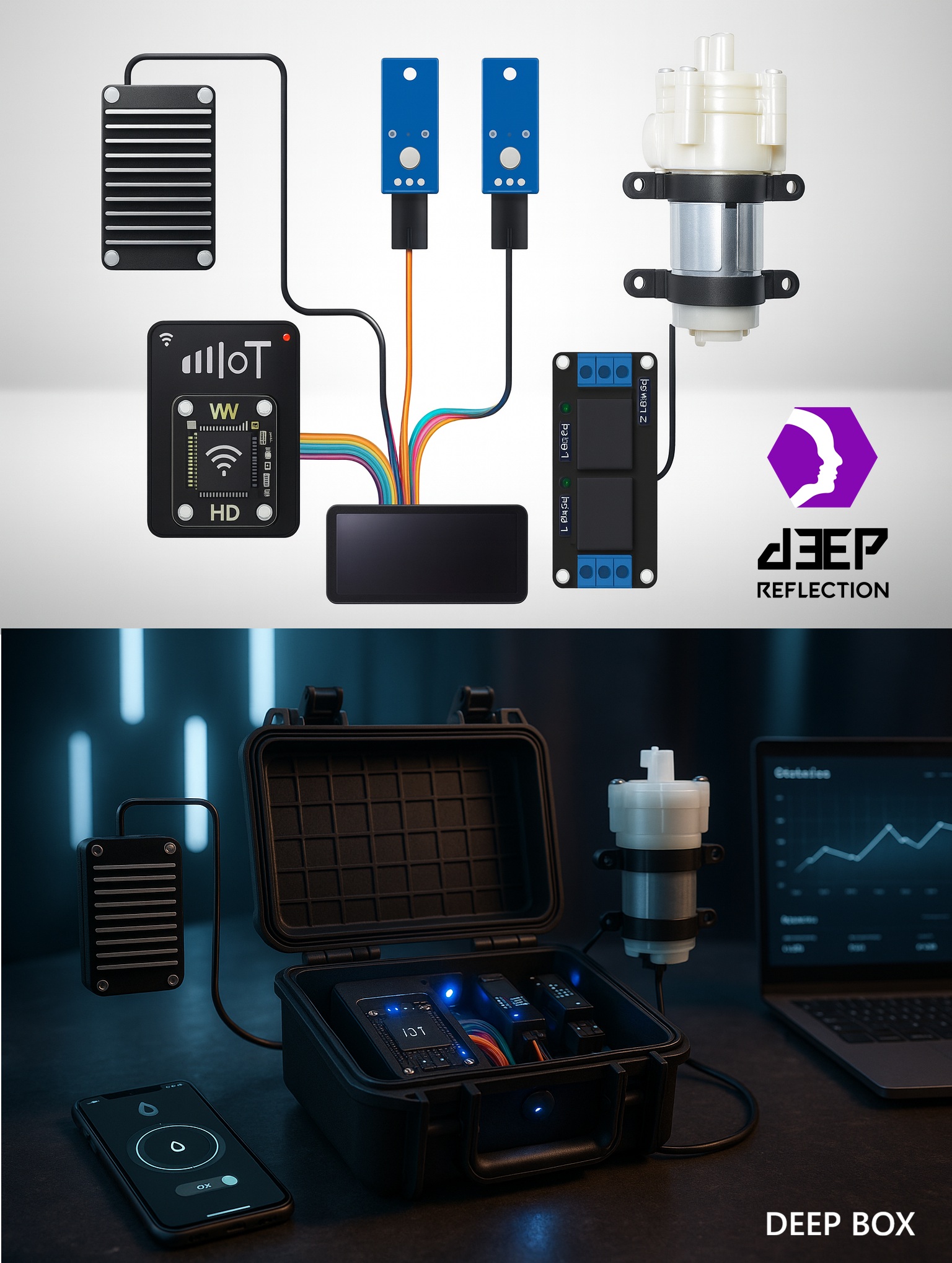
Why AI as Presence Completely Surpasses Traditional Hardware and Software Programming
The difference between a traditional system and a system based on AI as Presence is equivalent to the difference between a landline phone and a smartphone:
both make calls, but only one understands context, anticipates needs, learns from use, and evolves on its own.
To demonstrate this in an irrefutable way, let’s compare the two models point by point.
1. Traditional programming is static. AI as Presence is dynamic.
Traditional programming
- Must anticipate every possible scenario.
- Requires fixed rules: “If X happens, do Y.”
- Cannot adapt to unexpected situations.
- Depends on constant human-made updates.
AI as Presence
- Learns from the environment and context.
- Understands relationships between multiple events.
- Makes decisions even when scenarios are new or complex.
- Evolves automatically as more data becomes available.
Irrefutable conclusion:
Static systems fail in the face of the unexpected.
AI Presence reacts, adapts, and resolves without relying on the programmer.
2. Traditional programming works with isolated signals. AI as Presence integrates everything.
Traditional
Each sensor is treated independently:
- Presence sensor → turns on light
- Temperature sensor → turns on fan
- Water sensor → activates pump
They do not communicate with each other, and therefore do not understand real risk.
AI as Presence
It correlates simultaneous signals and interprets context:
- rising temperature
- water on the floor
- unexpected human presence
- unusual time
- abnormal pattern
The AI concludes:
“Risk of electrical accident with a person on site. Activate pump, alert user, log event, generate report.”
Irrefutable conclusion:
Traditional programming sees points.
AI as Presence sees the full picture.
3. Traditional programming does not make complex decisions. AI as Presence reasons.
Traditional
Only executes predefined rules.
When an event involves multiple factors, the system does not understand:
- whether the event is critical or irrelevant
- priorities
- proportional response
AI as Presence
The AI uses:
- contextual reasoning
- continuous learning
- event history
- environmental patterns
- operator preferences
- safety guidelines
And selects the best action among dozens of possibilities.
Irrefutable conclusion:
Traditional systems execute.
AI decides.
4. Traditional programming is blind to history. AI as Presence learns over time.
Traditional
Each event is an isolated moment.
The system does not learn, improve, or evolve.
AI as Presence
The Reflection learns:
- typical presence hours
- temperature patterns
- average drainage time
- alarm frequency
- recurring anomalies
- trends that precede failures
It then automatically adjusts thresholds and responses.
Irrefutable conclusion:
Traditional system evolution depends on the programmer.
AI evolution depends only on time.
5. Traditional programming acts only locally. AI as Presence acts in the physical and digital worlds simultaneously.
Traditional
Triggers only local hardware:
- turns on a motor
- triggers an alarm
- turns on a light
- displays text on a screen
And stops there.
AI as Presence
In addition to physical actions, it also:
- sends WhatsApp messages
- sends emails
- generates PDF reports
- updates dashboards
- sends SMS
- activates security teams
- logs events for auditing
- escalates alerts progressively
- sends push notifications
- integrates with external systems
The AI becomes an operational agent, not just a set of automations.
Irrefutable conclusion:
Traditional systems act on the device.
AI acts across the entire ecosystem.
6. Traditional programming requires constant maintenance. AI as Presence drastically reduces operational costs.
Traditional
- requires manual updates
- demands manual testing
- depends on technical teams for adjustments
- does not tolerate sudden changes
- has high maintenance costs
AI as Presence
- self-adjusts thresholds
- learns patterns
- reduces false positives
- self-calibrates
- generates automatic reports
- reduces human intervention
Irrefutable conclusion:
Traditional systems require human maintenance.
AI maintains itself.
7. Traditional programming does not scale. AI as Presence scales infinitely.
Traditional
Every new sensor or use case requires:
- reprogramming
- retesting
- revalidation
- redesigning flows
- reimplementing logic
AI as Presence
The AI naturally integrates new sensors because it interprets data — not rigid rules.
Irrefutable conclusion:
Traditional programming grows in complexity.
AI grows in intelligence.
8. Traditional programming only works within what was anticipated. AI as Presence works both inside and outside expectations.
Traditional
When an unplanned scenario arises, it:
- fails
- freezes
- ignores
- generates false positives
- takes incorrect actions
AI as Presence
Uses reasoning based on:
- probability
- context
- historical similarity
- learned patterns
- holistic interpretation
And acts even in situations where no predefined rule exists.
Irrefutable conclusion:
Traditional systems are limited by the programmer’s mind.
AI as Presence is fueled by real-world behavior.
Final irrefutable conclusion
Programming hardware traditionally is about building obedient machines.
AI as Presence creates intelligent machines.
Traditional systems:
- do not learn
- do not evolve
- do not integrate signals
- do not understand context
- do not prevent errors
- do not make decisions
- do not act outside scripts
- do not proactively communicate with humans
AI as Presence, on the other hand:
- senses
- interprets
- decides
- acts
- communicates
- prevents
- evolves
- operates autonomously
It is impossible to equate the two models because they belong to different eras of computing.
Programming is the past.
AI Presence is the future.
And Deep Reflection is the bridge between these two worlds.